Charlotte has no shortage of painting companies. Here’s how to tell the licensed, insured professionals apart from the guy with a truck and a Facebook page.
Charlotte’s growth has brought a flood of painting companies into the market — some excellent, some unlicensed and uninsured, and some that will take a deposit and disappear. Most homeowners can’t tell the difference from a Google search or a glossy website alone.
This guide walks through exactly what to check before you hire a painter in Charlotte, Gastonia, Belmont, Shelby, or anywhere in between — so you can hire with confidence instead of hoping for the best.
Step 1: Confirm They’re Licensed and Insured for the Job
North Carolina doesn’t require a special state license just to paint. But once a project — including labor and materials — hits $40,000 or
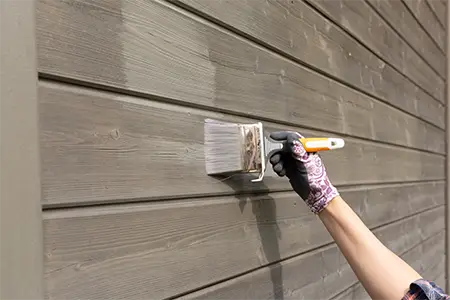
Straight Edge Painting Pros crew working on a home in the Charlotte, NC area
more, the contractor is legally required to hold a General Contractor’s license through the NC Licensing Board for General Contractors. Most single-family interior or exterior repaints fall well under that threshold, but larger commercial, multi-unit, or whole-property jobs often don’t.
Licensing aside, insurance is non-negotiable at any project size:
- General liability insurance — protects you if something is damaged during the job. $1 million in coverage is a common standard requested by homeowners, HOAs, and property managers in the Charlotte area.
- Workers’ compensation — required by North Carolina law for any company with three or more employees. Without it, you could be liable if a worker is injured on your property.
Ask for a certificate of insurance (COI) before work starts. A legitimate company will send one without hesitation.
Step 2: Look Past the Star Rating — Read Real Local Reviews
A 4.8-star rating means very little without context. Check reviews across more than one platform — Google Business Profile, Nextdoor, and the Better Business Bureau are good starting points — and read a handful of the most recent ones, not just the top three.
A few things worth watching for:
- A steady trickle of reviews over months or years reads as more genuine than a sudden cluster of five-star reviews in one week.
- How the company responds to negative reviews often tells you more than the reviews themselves.
- Nextdoor is particularly useful for painters, since neighbors tend to post honestly about contractors who worked on nearby homes.
Step 3: Get a Detailed Written Estimate
A trustworthy painter will put specifics in writing, not just a single bottom-line number. Before you sign anything, your estimate should spell out:
- Exact square footage or rooms/surfaces being painted
- Number of coats included
- Paint brand and sheen
- What prep work is included (patching, sanding, pressure washing, priming)
- Estimated start and completion dates
- Payment schedule and deposit amount
- Cleanup and protection of furniture, floors, and landscaping
If a quote is missing most of this, ask for it in writing before comparing prices — a vague number is nearly impossible to compare fairly against a detailed one.
Step 4: Ask These Questions Before You Sign
- Is the crew in-house or subcontracted? Both can be fine, but you deserve to know who’s actually doing the work.
- What’s the warranty on labor and paint? A one- or two-year workmanship warranty is common among established local painters.
- How do you handle weather delays? Charlotte’s humidity and rain patterns can push back exterior schedules — see when professional painters avoid painting outside for why that’s actually a good sign, not a red flag.
- Do you handle prep work like pressure washing in-house? Companies that offer both, like pressure washing alongside painting, can schedule prep and painting back-to-back instead of juggling two separate contractors.
- What’s your deposit policy? A modest deposit is standard; a demand for full payment upfront is not.
Red Flags That Should Make You Pause
Watch out for these
- Door-to-door solicitation asking for a large cash deposit on the spot, especially after storm damage in the area.
- No local address or working phone number — a company that’s hard to reach after the deposit clears is hard to hold accountable.
- Pressure to sign the same day for a “special” discount.
- A bid dramatically lower than every other quote you received, which often means missing prep work or a plan to use one coat where two are needed.
- No written contract — verbal agreements leave you with no recourse if the work doesn’t match what was promised.
Understanding What You Should Expect to Pay
Charlotte-area pricing generally tracks national averages: roughly $2 to $6 per square foot for interior work and $1.50 to $4.00 per square foot for exterior work, before factoring in prep, trim, and paint quality. For a full breakdown by room and home size, see our guide on how much it costs to paint a house. If a quote comes in far outside these ranges in either direction, ask why.
Why Local Experience Matters in Charlotte’s Climate
A painter who works exclusively in a different climate may not account for how Charlotte’s humidity, pollen season, and summer heat affect drying time and paint adhesion. Local experience isn’t just a nice-to-have — it affects how long your paint job actually lasts. We cover the specifics in how Charlotte weather affects your paint job.
Straight Edge Painting Pros: Local, Licensed & Insured
We paint homes and businesses across Gastonia, Belmont, Charlotte, Shelby, Huntersville, Denver, Mount Holly, and Kings Mountain — and we’re happy to answer every question in this guide before you hire anyone.
Or call us directly: (704) 870-7600
Frequently Asked Questions
Do painters need a license in North Carolina?
North Carolina doesn’t require a separate state license just to paint. However, any contractor bidding on or performing work worth $40,000 or more (materials and labor combined) must hold a General Contractor’s license through the NC Licensing Board for General Contractors. Most single-family interior or exterior repaints fall under that threshold, but it’s still worth asking a painting company about their licensing, especially for larger commercial or multi-unit jobs.
How much insurance should a Charlotte-area painting company carry?
General liability insurance is the minimum you should ask for, and $1 million in coverage is a common standard requested by homeowners, HOAs, and commercial property managers in the Charlotte area. If the company has three or more employees, North Carolina law also requires them to carry workers’ compensation insurance. Ask for a certificate of insurance before work begins.
How do I know if a painting company’s online reviews are trustworthy?
Look at reviews across more than one platform, such as Google, Nextdoor, and the Better Business Bureau, rather than relying only on testimonials posted on the company’s own website. A trustworthy contractor will typically have a steady stream of reviews over time, not a sudden cluster, and will respond professionally to any negative feedback rather than ignoring or deleting it.
How far in advance should I book a painter in Charlotte, NC?
Spring and fall are the busiest seasons for painting in the Charlotte area, so booking 3 to 6 weeks ahead is a safe rule of thumb during those windows. Winter and late summer tend to have more open availability, and exterior jobs in particular depend on a stretch of dry, moderate-temperature weather to schedule around.