
Before starting an outdoor painting project, knowing when not to paint outside can be helpful. The weather plays an important role in how well your paint system will hold up. Factors like temperature, humidity, and weather forecasts are at play. Choosing the right time and conditions will ultimately save you time and money and give you better, more durable, longer-lasting results.
What are the Worst Weather Conditions for Exterior Painting?
When it comes to exterior residential painting, timing is crucial. As professional painters, we avoid starting projects when 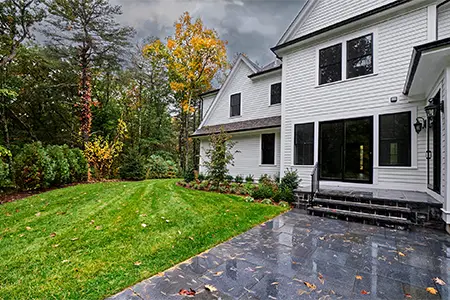 there’s a chance of rain, humidity, or extreme temperatures, such as heat or cold. Direct intense sunlight can also affect the paint curing and drying process.
Ignoring any of these factors may lead to uneven finishes, weaker adhesion, or the eventual development of more serious paint problems like:
- Peeling or cracking
- Bubbling
- Mold growth
- Reduced durability
- Permanent paint failure.
When is it Too Cold to Paint Outside?
Painting outside when it’s too cold can lead to major issues, especially as temperatures drop further at night. Paint needs adequate time and stable conditions to bond to the surface and dry.
Does paint dry in cold weather? Technically, yes. However, if you paint during colder months, it may result in slower drying and extended curing times. While this may seem fine at first, it may eventually lead to cracking, staining, or mildew formation down the road. This is because the paint remained soft and vulnerable to contaminants for a longer period of time before hardening.
So, what is the lowest temperature to paint outside? It depends on the type of paint you’re using for your project. In general, most exterior painting projects should be done only if temperatures remain above 50°F (10°C) for at least 24 hours after application. o curing time remains unaffected, and the paint dries more naturally.
When is it Too Hot to Paint Outside?
Does paint dry faster in heat or cold? The answer is that it dries much faster in the heat. But just as painting in cold weather is not ideal, painting outside during extremely high temperatures can pose problems, too.
Freshly applied paint tends to dry too quickly when it’s extremely hot outside. This prevents the paint from spreading evenly and bonding properly to surfaces, leading to blisters, cracks, and even color inconsistency.
As for the highest temperature to paint wood outside, it’s best to avoid doing so when temperatures soar above 85-90°F (29-32°C), so you won’t have to deal with these paint defects in the future.
Before doing any exterior painting, our advice is to always use an infrared thermometer to check the surface temperature of the material you’re painting, and begin the project if the reading falls within the range indicated on your paint’s label. If it doesn’t, it might be in your best interest to reschedule.
Painting in Direct Sunlight or at Night
Similarly, the time of day you paint may affect the results. If you apply paint on hot afternoons in direct sunlight, it will dry too quickly, preventing proper bonding and leveling.
Meanwhile, painting at night is also discouraged because temperatures drop and dew forms on surfaces, which can affect curing time and leave streaks and spots. Also, lower visibility makes painting even more challenging during this time, as it’s harder for you to see if you’ve missed spots or applied coats unevenly.
Professional painters usually refrain from doing either unless it’s completely unavoidable.
The Problem With Moisture, Humidity, and Rain
Moisture poses a serious problem for exterior paint jobs. Even if the temperatures outside are ideal, both humidity and rain can still affect paint performance and durability.
Humidity means the presence of water vapor in the air. When it’s very humid outside, it can slow down evaporation and interfere with proper film formation during curing.
Based on experience, if you paint outdoors in very humid conditions, it doesn’t take long for bubbles to form or mildew to grow in the paint due to moisture trapped beneath the surface. To avoid this, use a hygrometer to measure humidity and aim for the ideal range of 40 to 70% so the paint dries at a steady rate.
Rain is another concern for painters. A sudden downpour can leave behind streaks and patches, cause adhesion failure, or worst of all, wash away all your efforts. Painting right after rain is also highly discouraged since surfaces need enough time to dry before paint is applied. When rain is expected within 24 to 48 hours, we strongly discourage painting outdoors.
Best Conditions to Do Exterior Painting
After more than a decade in the business here in North Carolina, we’ve found that both the timing and conditions during paint application 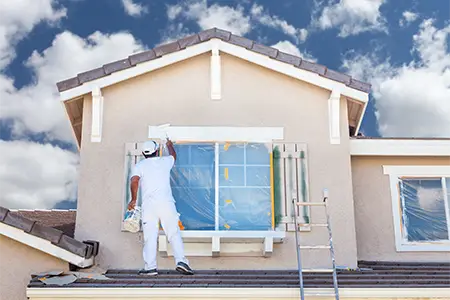 are very important to ensure your paint job holds up well. To achieve the best results, here are a couple of pointers to keep in mind:
-
- When is the best time to paint outside? We recommend doing so mid-morning to early afternoon (9 or 10 AM to 2 or 3 PM). By this time, temperatures have reached an acceptable range, and the paint has had enough time to dry before nightfall.
- What temperature does it need to be to paint outside? Aim for moderate temperatures between 50-85°F (10-29°C), with manageable humidity.
- When not to paint outside? Don’t paint when it’s too hot, too cold, too humid, raining, or at night.
Need Professional Exterior Painting Services?
If the unpredictability of North Carolina’s weather makes you hesitant to start your exterior residential painting project on your own, we’re here to help. Call our team at (704) 870-7600 or contact us online for a free quote, color consultation, or professional advice.